Measure a favourite top before choosing a size
Compare like with like: body measurements and flat garment measurements are different.
Before you start
Use a flexible tape and a well-fitting garment with a similar cut and stretch. Find the exact item’s size chart and its measurement method.
- 01
Identify what the chart measures
Determine whether the chart gives body circumference or flat garment width. A flat chest width of 50 cm is not a 50 cm body circumference. Do not compare those numbers directly.
- 02
Measure without stretching
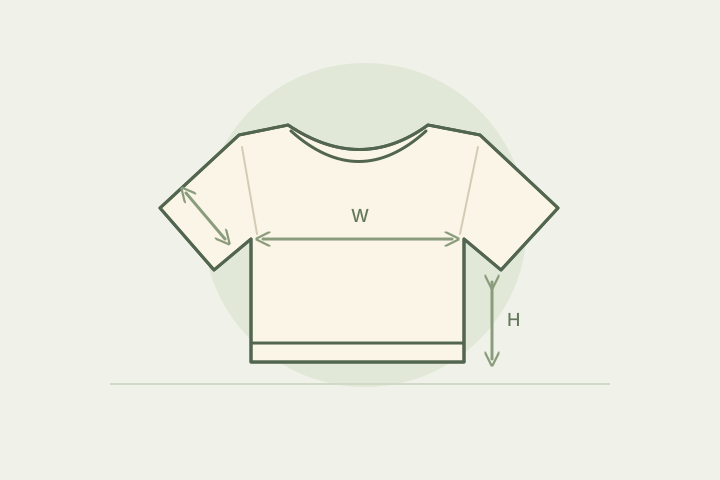
Lay the garment flat. Measure chest width at the points used in the chart, then shoulder, sleeve and body length as described there. Record centimetres and do not pull stretchy fabric taut.
- 03
Compare fit, not just a letter
Compare the measured garment with the item’s chart. Consider the desired ease, layering and stretch. S, M and L vary between products; weight or height alone cannot identify a reliable fit.
- 04
Ask when the chart is missing
Request the exact variant’s garment dimensions and measurement tolerance. Do not invent a size conversion or promise shrinkage behaviour without verified material and care information.
Know the limits
- The linked product’s options are not a substitute for a complete size chart.
- The diagram shows reference measurements; use the seller’s stated measuring points if different.
- Care and shrinkage depend on the actual textile and care label.